3rd Quarter Newsletter 2025
for the Leavenworth Nutcracker Museum
This page is best viewed on a PC or tablet.
|
CAN THE GERMAN NUTCRACKERS REALLY CRACK
NUTS? |
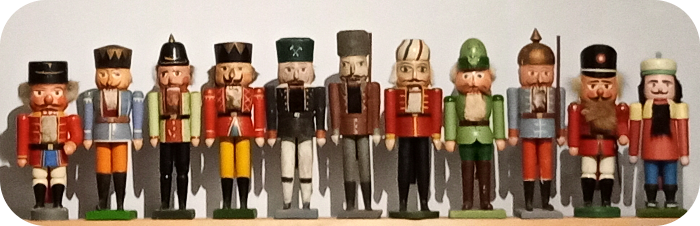
The wooden toy soldier nutcracker from Germany was indeed created
to crack nuts. Records show that in 1735 there was mention of a “nut-biter”
with a human look, and by the beginning of the 19th century nutcrackers from
the Erzgebirge were being sold at the Dresden street-markets by peddlers
carrying their wares on their backs.
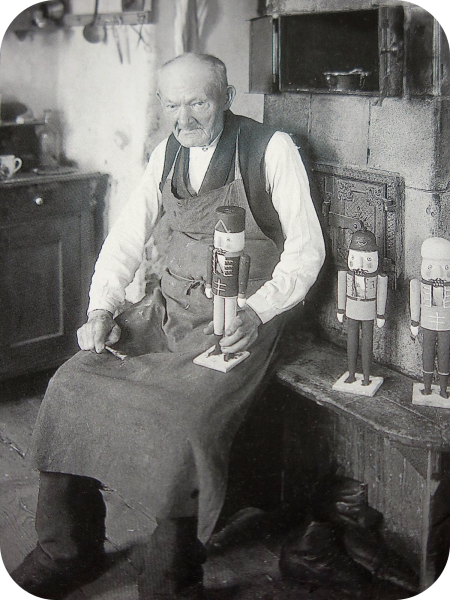
The
makers of these nutcrackers were miners who spent the winters working with
wood in their homes when the mines were closed. Wood was plentiful and
mountain streams powered the lathes that turned the rounded leg, arm and
body parts. The first nutcrackers were figures of kings, soldiers,
policemen, and other figures of authority that represented oppression and
hardships to the common people. They took great delight in having their
rulers now working for them, cracking the hard nuts of life. They also
considered nutcrackers to be symbols of good luck and placed them in windows
to guard their homes. For baring their teeth in their intimidating smile,
the nutcrackers were believed to scare away evil spirits. However, it must
be explained that the real reason for the “toothy” look was because the
nutcracker had to have a level chomping action.
Wilhelm
Fuechtner was crowned “Father of the Nutcracker” in 1872 and the design he used is
indeed quite clever. The body part of his nutcracker includes the head and
has a time-consuming cut-out to accommodate the handle which holds those
fierce-looking teeth. It is because the body and head are made in one piece
that Feuchter nutcrackers do not break with continued use. Although
Erzgebirge makers followed the Fuechtner slender body style, most makers
saved time and work by cutting the head separately, then connecting it to
the body with screws. This works satisfactorily if strong wood and long,
quality screws are used; otherwise, breakage occurs.
 The
Fuechtner method, with the body and head of one piece is still used
today by the sixth generation of the Fuechtner family, just as they have
been made for over 150 years.
The
Fuechtner method, with the body and head of one piece is still used
today by the sixth generation of the Fuechtner family, just as they have
been made for over 150 years.
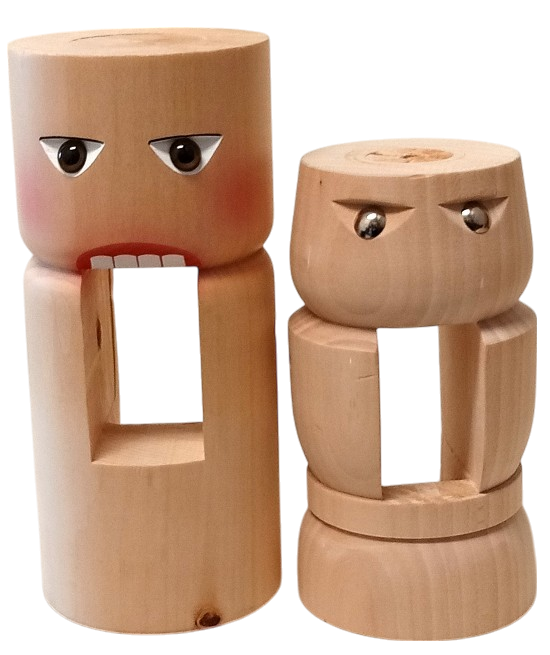
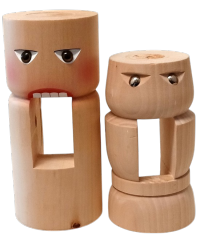
This picture shows the Ulbricht body on Left and
Fuechtner body on Right with head and body cut in one piece and hole cut out
for the handle and teeth. The Fuechtner and Junghänel bodies traditionally
shaped and never adorned with fabric, whereas the Ulbricht Premier designs
always have a cloth costume.
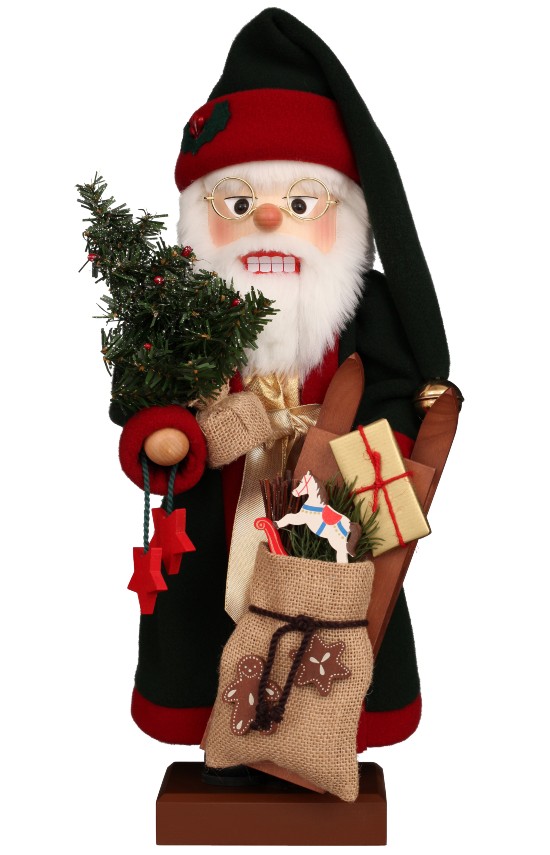
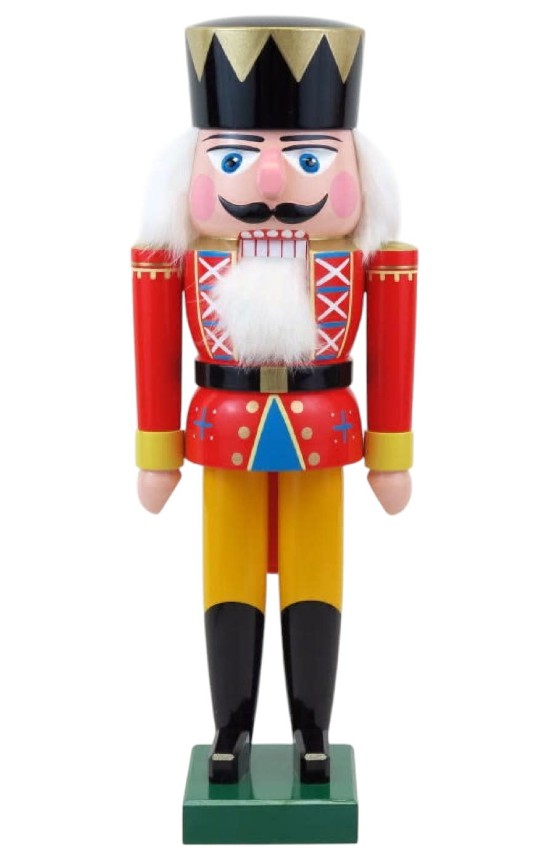
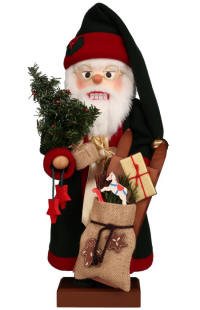
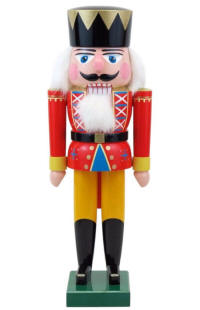
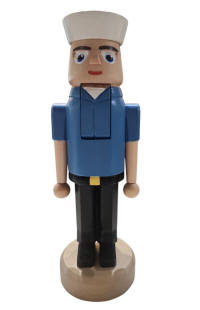
Hanno Junghänel also turns the full
body and head for his military designs in one piece then inserts the lever
with teeth in a cavity he has cut out. Pictures show finished Ulbricht,
Fuechtner, and Junghänel nutcrackers. The clerks at the Leavenworth
Nutcracker Museum gift shop do suggest these makers when customers ask for a
toy soldier nutcracker that will crack nut without breaking. Yes, they are
expensive, but you will be assured of quality nutcracker that will give
hours of cracking fun.
Although you can crack nuts with most
other German makers, it is suggested that you use only those smaller nuts
with softer shells. Do not try to crack black walnuts or Brazil nuts. Be
aware of the size of the mouth opening, Nutcrackers 10-12 inches in height
and a mouth opening of 7/8 inches can only accommodate a small hazelnut. A
nutcracker of 12-14 inches will have an opening of about 1 1/4 inches and
the opening of those over 14 inches is usually about 1 3/8 inches. These
will accommodate hazel nuts, pecans and small walnuts. Guests question the
small mouth of the antique nutcrackers, but they were used with the small
wild hazel nut called ‘cobnut’. Genetic engineering has increased the size
of the hazel nut over the years.
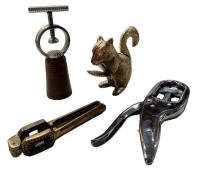 Beware of those nutcrackers that come from
Asian countries. Rather than buy a cheaply made wooden toy soldier
nutcracker for cracking nuts, it is better to use those for decoration only
and invest in an inexpensive mechanical metal type if the better-quality
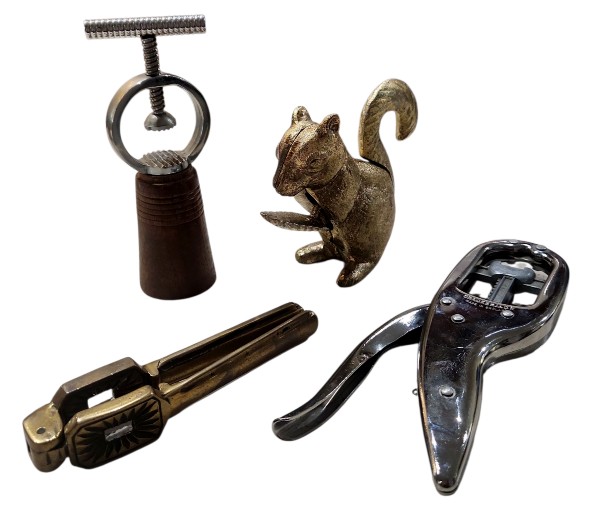
German nutcrackers are beyond your means. You can find interesting and fun
designs that will open the hard shells so you can enjoy those delicious and
healthy morsels. On Nutcracker Day at the Leavenworth Nutcracker Museum,
children delight in opening nuts with older style metal nutcrackers their
grandmothers used. And on that special day judging will be made of those
nutcrackers the children themselves have created that will indeed crack a
hazelnut. Nutcracker Day is always on the last Saturday in June, the same
day as Leavenworth’s popular Accordion Festival.
Beware of those nutcrackers that come from
Asian countries. Rather than buy a cheaply made wooden toy soldier
nutcracker for cracking nuts, it is better to use those for decoration only
and invest in an inexpensive mechanical metal type if the better-quality
German nutcrackers are beyond your means. You can find interesting and fun
designs that will open the hard shells so you can enjoy those delicious and
healthy morsels. On Nutcracker Day at the Leavenworth Nutcracker Museum,
children delight in opening nuts with older style metal nutcrackers their
grandmothers used. And on that special day judging will be made of those
nutcrackers the children themselves have created that will indeed crack a
hazelnut. Nutcracker Day is always on the last Saturday in June, the same
day as Leavenworth’s popular Accordion Festival.
Arlene Wagner, The Nutcracker Lady
Leavenworth Nutcracker Museum
Email: curator@nutcrackermuseum.com
Contact Us
Monday - Saturday 11-5pm
Sunday - 11-4:30pm
We suggest visitors arrive at least 30 minutes before closing.

 Nutcracker
Museum
Nutcracker
Museum